Get to Know Thread Lifting First
lifting threads is inserted
beneath the skin,
Thread lifting should be performed by
A skilled doctor will carefully design the thread
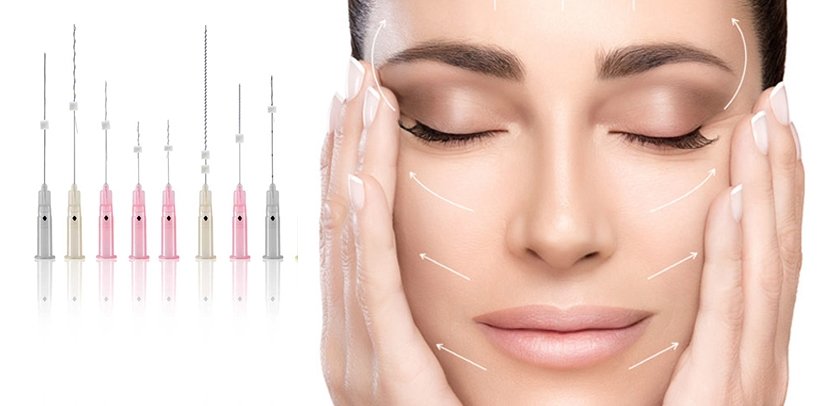
Thread Lifting or Facial Tightening
& Collagen Stimulation
Thread lifting is currently one of the most popular aesthetic procedures. It is simple,
requires no downtime,
and delivers quick visible results.
Thread lifting not only helps lift and contour the face but also addresses skin laxity and sagging.
In addition, thread lifting
stimulates the production
of Type I and Type III collagen
helping the face appear more youthful.
The Thread liftting technique enhances lifting tension within the skin, especially when applied to the cheek area, resulting in an immediate lifting effect and longer-lasting results compared to
conventional thread lifting.
Research shows that thread lifting can provide lifting effects and stimulate collagen production for approximately 12–16 months.
There are several types of threads used in aesthetic procedures, but the main ones include the following.
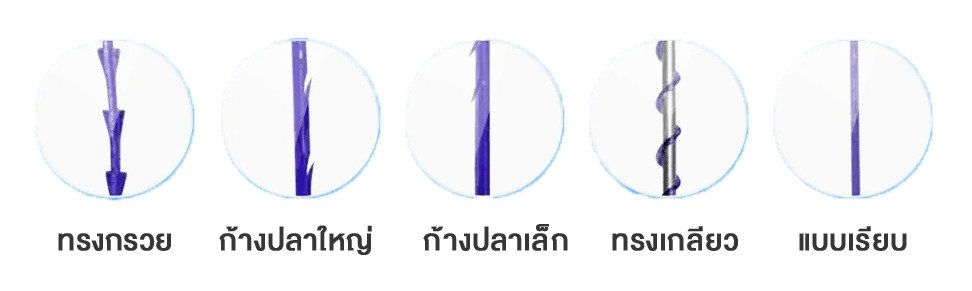
Types of Thread Shapes
Different types of threads designed for specific purposes
1. Smooth threads – Straight threads without barbs, mainly used to stimulate collagen
production and improve skin quality.
2. Cog threads (barbed threads) – Threads with tiny barbs that hook into the skin,
providing a strong lifting effect.
3. Screw threads (twisted threads) – Threads twisted around the needle,
used to add volume and firmness.
4. Mesh (net) threads – Interwoven threads forming a mesh-like structure
for longer-lasting results.
5. Cone threads – Threads with small cone-shaped
structures that help anchor effectively.
Each thread shape is selected based on the patient’s facial structure and
desired outcome to achieve the best and most natural-looking results.
Thread Lift Placement Areas
Thread lifting can be applied to different areas of the face
depending on the patient’s needs.
Common placement areas include:
Cheeks – To lift sagging cheeks and define the mid-face contour.
Jawline & Chin – To tighten the jawline and reduce a double chin.
Nasolabial Folds (Smile Lines) – To soften deep lines around the mouth.
Eyebrows & Eye Area – To lift drooping eyebrows and the outer corners of the eyes.
Neck – To tighten loose skin and improve neck contours.
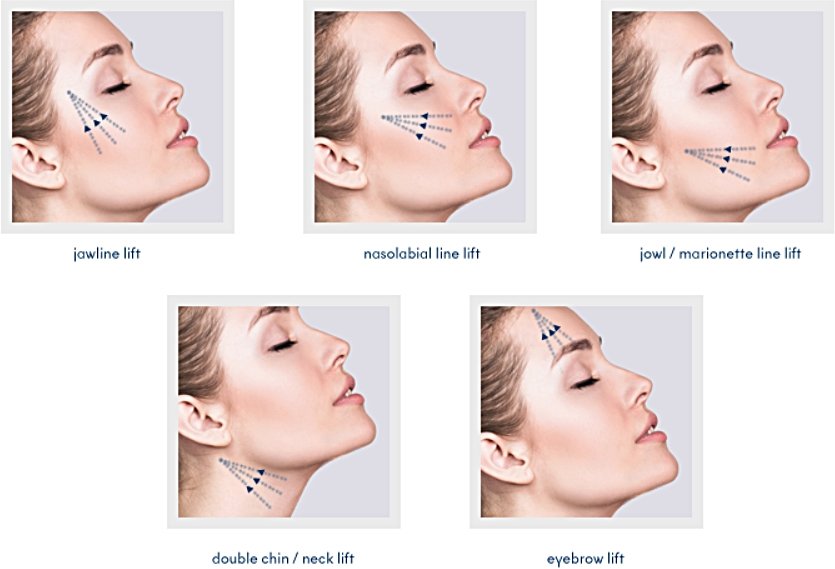
Thread Lift Placement Depends on the Doctor
Thread lift placement is carefully planned according to each patient’s facial structure and concerns. Before the procedure, the doctor analyzes ensures that the thread lift results meet the patient’s desired outcome.
Thread lifting can address various areas and concerns, including:
- Thread Lifting the eyebrows
- Thread Lifting the outer corners of the eyes
- Thread Lifting Stimulating collagen production
- Thread Lifting Reducing a double chin
- Thread Lifting and Tightening loose skin
- Thread Lifting Nose shape
- Thread Lifting Enhancing lips
- Thread Lifting Filling nasolabial folds
- Thread Lifting Lifting the mid-face
- Thread Lifting Defining the jawline
- Thread Lifting Correcting sunken cheeks
Baan Bangna Clinic (BBC)